x
K
E
Y
S
T
O
N
E


Why Floating Ball Valves Are a Top Choice for Fluid Systems
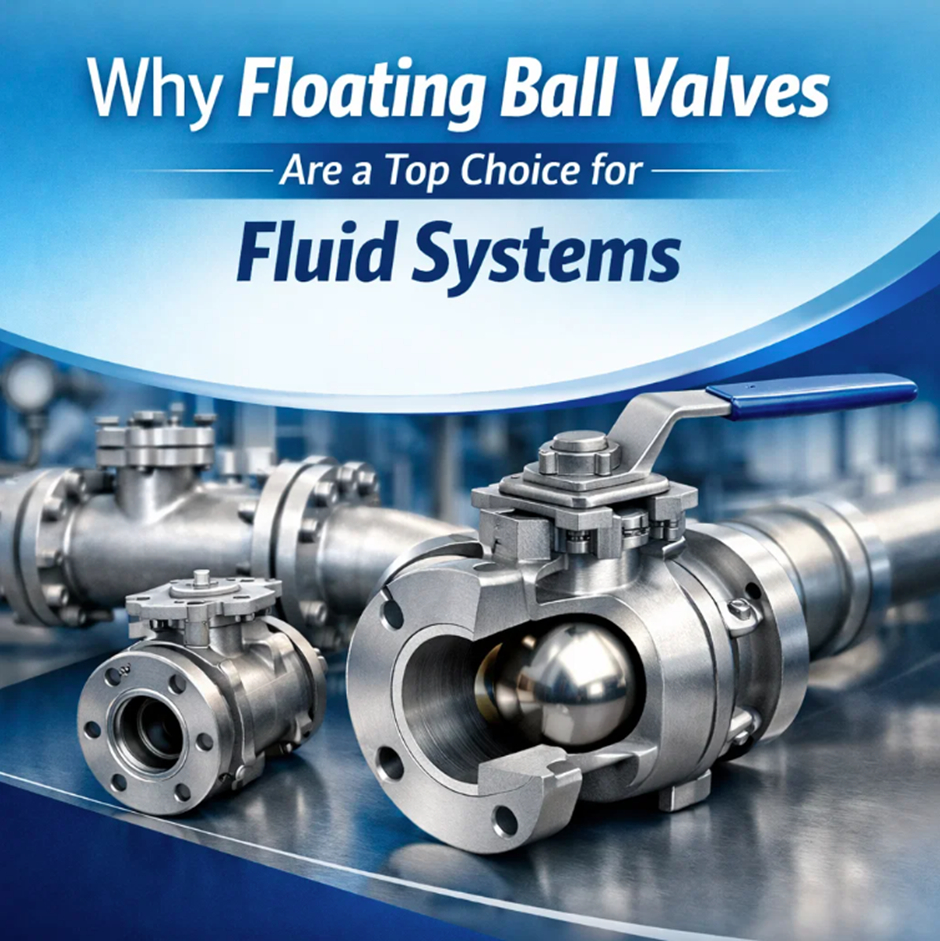
When it comes to controlling the flow of fluids or gases in piping systems, choosing the right valve is crucial. One of the most reliable options for this task is the floating ball valve. This type of valve is often used in industrial settings for applications requiring tight shut-off capabilities and durability.
In this article, we will explore what floating ball valves are, how they work, and why they are essential for many industries.
What is a Floating Ball Valve?
A floating ball valve is a type of valve that uses a ball with a hole in it to control fluid flow. The ball "floats" between two seats and is held in place by the pressure of the fluid. When the valve is closed, the ball completely blocks the flow.
The ball valve floating ball design makes it easy to operate and provides a strong seal, ensuring the fluid does not leak. These valves are commonly found in oil, gas, chemical, and water industries. Their ability to handle high pressures, temperatures, and provide tight shutoff makes them indispensable in many applications.
How Does a Floating Ball Valve Work?
Floating ball valves work by rotating a ball that is positioned between two seats. The ball is not fixed but instead "floats" between the seats. When the valve is open, the hole in the ball aligns with the flow path, allowing fluid to pass through.
When the valve is closed, the ball rotates and blocks the flow completely. The pressure from the fluid ensures the ball stays tightly seated, providing a reliable seal.
Key Features of Floating Ball Valves
- Low Emissions: Designed to meet ISO 15848-1 API 641 Low Emissions standards.
- Various Sizes: Available from NPS ¼” to 10”.
- Pressure Ratings: ANSI 150–2500 pressure classes.
- End Connections: Flanged, SW, and NPT configurations.
- Durability: Built for high temperature and high-pressure conditions.
Applications of Floating Ball Valves
- Oil & Gas: Flow control in pipelines and storage tanks.
- Water Treatment: Regulating water supply systems.
- Chemical Processing: Safe handling of corrosive fluids.
- Power Plants: Steam and water flow control.
Benefits of Floating Ball Valves
- Easy to Operate: Simple on/off mechanism.
- Low Maintenance: Durable construction reduces downtime.
- Cost-Effective: Affordable for long-term industrial use.
- Reliable Performance: Tight shutoff prevents leakage.
- Versatile: Multiple sizes and pressure ratings available.
Floating Ball Valve vs. Other Types of Valves
| Valve Type | Floating Ball Valve | Rising Stem Ball Valve | Omni Valves |
|---|---|---|---|
| Design | Floating ball between two seats | Ball fixed to the stem | Multi-functional design |
| Flow Control | On/Off control | Precise flow control | Reliable for various industries |
| Durability | High | High | Very High |
| Ideal For | Standard applications | Critical flow control | Multiple fluid types |
Last Words
If you need a reliable, durable valve that can handle demanding applications, a floating ball valve is an excellent choice. It offers a simple design, high reliability, and minimal maintenance requirements.
At Keystone Valve Supply, we specialize in a range of high-quality valves, including floating ball valves and expanding plug valves. If you need expert advice or want to place an order, dial (610) 270-2814 today.
FAQs
1. What is the main advantage of using a floating ball valve?
It provides a tight seal, simple operation, and reliable performance.
It provides a tight seal, simple operation, and reliable performance.
2. How does a floating ball valve differ from a rising stem ball valve?
A rising stem valve has a fixed stem for precise control, while a floating ball valve relies on pressure seating.
A rising stem valve has a fixed stem for precise control, while a floating ball valve relies on pressure seating.
3. Can floating ball valves handle high temperatures and pressures?
Yes, they are designed for high-pressure and high-temperature industrial applications.
Yes, they are designed for high-pressure and high-temperature industrial applications.
4. Are floating ball valves suitable for corrosive fluids?
Yes, they are widely used in chemical processing industries.
Yes, they are widely used in chemical processing industries.
5. How do I maintain a floating ball valve?
Regular inspections for leaks and wear ensure long-term reliability.
Regular inspections for leaks and wear ensure long-term reliability.