

How Do Microfinish Valves Enhance Safety in Chemical Processing Plants
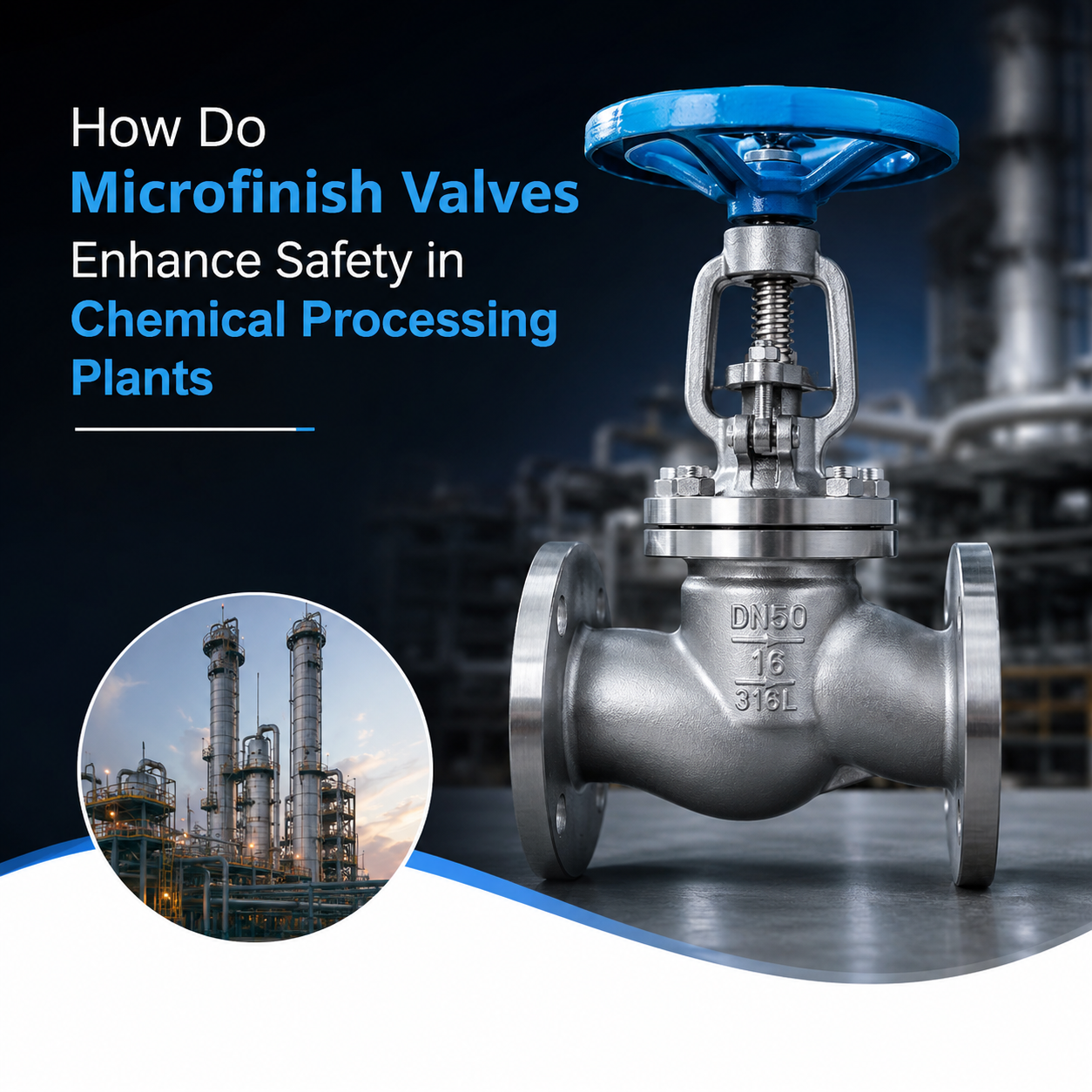
Overview: Chemical plants handle corrosive and hazardous media that can quickly damage standard valves and create dangerous leakage risks. This blog explains how microfinish valves improve plant safety through precision-machined sealing surfaces, low-emission packing, anti-static protection, corrosion-resistant materials, and compliance with API, NACE, and ISO standards for critical chemical processing applications.
A valve leak rarely starts as a disaster.
It usually begins with a faint vapor smell, slight packing seepage, or pressure instability operators notice during inspection rounds. Then corrosion spreads quietly. Seals weaken. Emissions rise. Production slows down.
That is exactly why microfinish valves have become critical in chemical processing plants handling aggressive acids, solvents, chlorides, hydrocarbons, and hazardous vapor systems.
In these environments, valve reliability is not optional. It is part of plant safety.
Why Standard Industrial Valves Struggle in Chemical Processing Plants
- 1. Corrosion resistance
- 2. Fugitive emission control
- 3. Fire-safe isolation
- 4. Pressure stability
- 5. Long-cycle sealing reliability
What Makes Microfinish Valve Engineering Different?
- 1. Vapor leakage
- 2. Chemical seepage
- 3. VOC emissions
- 4. Seal erosion
- 5. Pressure instability
How Surface Finish Quality Improves Sealing Performance
- 1. Bubble-tight shutoff performance
- 2. Seat longevity
- 3. Galling resistance
- 4. Operational stability
- 5. Fugitive emission reduction
Why Material Compatibility Decides Valve Safety
| Chemical Media | Recommended Valve Material | Engineering Benefit |
|---|---|---|
| Sulfuric Acid | Hastelloy C276 | Resists severe corrosion and pitting |
| Chlorine Service | Monel | Handles chloride attack effectively |
| Caustic Soda | Stainless Steel 316 | Maintains corrosion resistance under alkaline exposure |
| Solvent Processing | Reinforced PTFE Seats | Reduces swelling and chemical attack |
| Sour Chemical Service | NACE-Compliant Alloys | Protects against sulfide stress cracking |
- 1. Chemical concentration
- 2. Process temperature
- 3. Pressure range
- 4. Flow velocity
- 5. Vapor exposure conditions
How Anti-Leakage Designs Reduce Chemical Exposure Risks
- 1. ISO 15848 fugitive emission standards
- 2. API 598 leakage testing
- 3. API 608 floating ball valve standards
- 4. ASME B16.34 pressure-temperature requirements
Why Anti-Static Features Matter in Chemical Plants
- 1. Ball and stem
- 2. Stem and body
- 3. Internal metallic components
How Fire-Safe Construction Improves Plant Protection
- 1. API 607 fire-safe standards
- 2. ISO 10497 fire testing
- 3. API 6D shutoff verification
Why Double Block and Bleed Systems Improve Isolation Safety
- 1. Cross-contamination risks
- 2. Accidental chemical exposure
- 3. Maintenance hazards
- 4. Pressure retention concerns
What Should You Verify Before Selecting Chemical Processing Valves?
- 1. NACE MR0175 or MR0103 compliance
- 2. Fugitive emission certification
- 3. Fire-safe testing records
- 4. Anti-static protection
- 5. Material traceability
- 6. Pressure-temperature ratings
- 7. ISO 5211 actuator compatibility
- 8. Maintenance accessibility
Why Chemical Plants Now Prioritize Engineered Valve Reliability
- 1. Longer service life
- 2. Lower emission rates
- 3. Predictable maintenance cycles
- 4. Higher process safety margins
- 5. Better operational reliability