
x
K E Y S T O N E
Keystone Valve Supply - Global Valve Solutions for Oil & Gas Industry

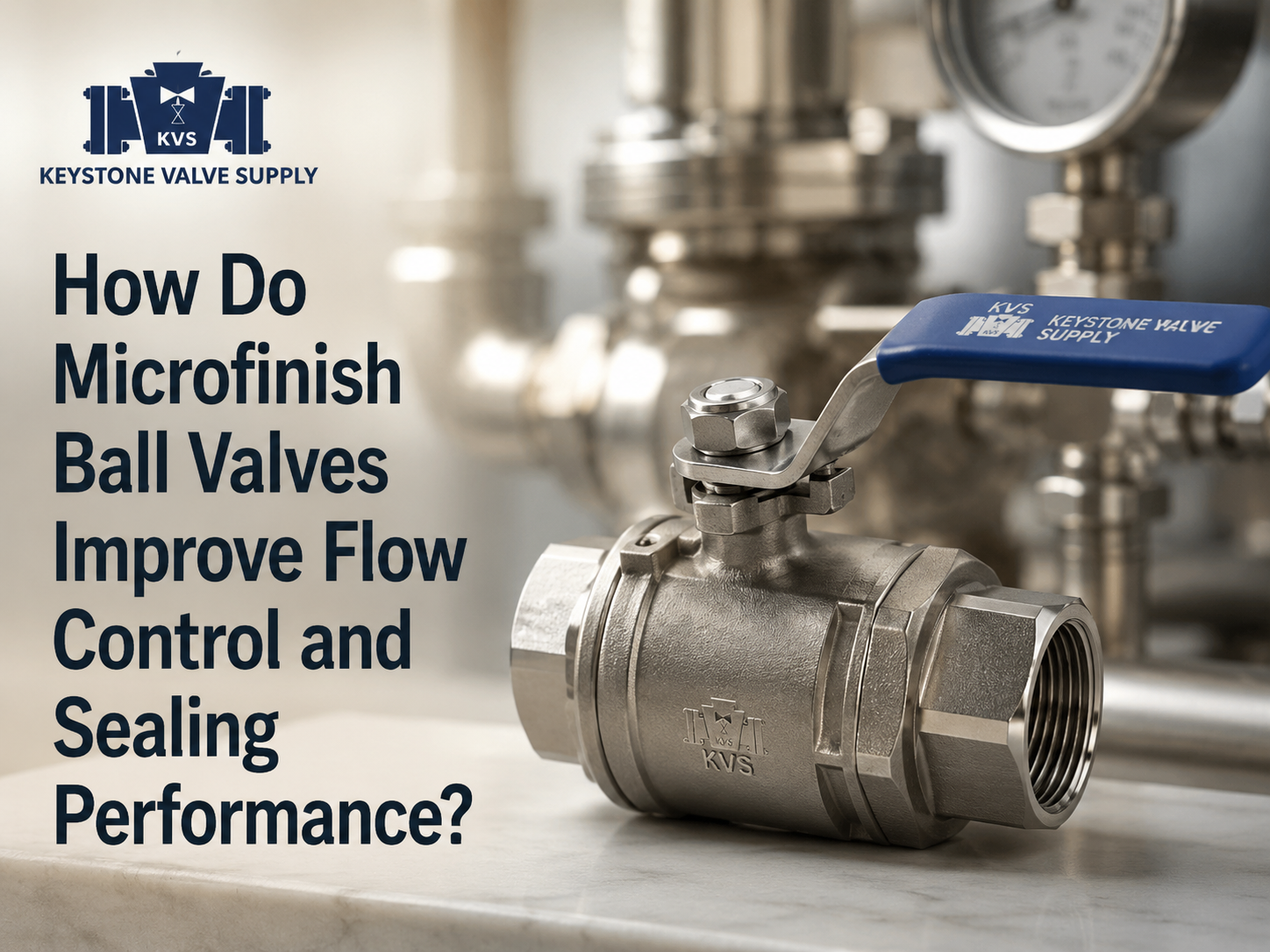
How Do Microfinish Ball Valves Improve Flow Control and Sealing Performance?
Expanding plug valve

Summary: Microfinish Ball Valves enhance flow control and sealing performance by using smoother internal surfaces that reduce friction, turbulence, and wear. This results in better flow efficiency, tighter sealing, and longer service life. They also lower maintenance needs and improve reliability in high-pressure systems, making them a practical and efficient choice for demanding industrial applications.

When you’re working with high-pressure pipelines, even the smallest inefficiency can turn into a big problem. Flow disruptions, leakage, and wear can slowly reduce performance. That’s where Microfinish Ball Valves make a real impact. They are designed to provide smoother flow and tighter sealing, helping your system perform better with less effort.

Let’s understand how these valves improve both flow control and sealing performance in practical terms.

Importance of Surface Finish in Flow Control

Surface finish plays a key role in how fluids move through a valve. A smoother internal surface reduces friction between the fluid and valve components. This allows the fluid to flow more easily and steadily.
With reduced resistance, turbulence also decreases. This leads to better control over flow rates and improved system efficiency. In simple terms, smoother surfaces help your system run more smoothly and consistently.

Role of Precision Finishing in Sealing Performance

Sealing performance depends on how well the valve components come into contact. Even a small gap can cause leakage, especially in high-pressure conditions.
This is where microfinish valves offer a clear advantage. Their polished surfaces ensure a tighter fit between the ball and the seat. This reduces leakage and improves sealing reliability.
Better contact between surfaces results in stronger sealing. This helps maintain system integrity and prevents unexpected losses.

Performance Benefits in High-Pressure Systems

High-pressure environments require components that can perform reliably over time. Valves must maintain consistent operation without failure.
With smoother internal surfaces, these valves experience less friction and wear. This extends their service life and reduces the risk of damage. Consistent sealing also helps maintain pressure without fluctuations.
Reliable performance means fewer interruptions. It allows your operations to continue without unnecessary downtime.

Impact of Surface Finish on Maintenance Requirements

Maintenance is a major concern in industrial systems. Frequent repairs can increase costs and disrupt operations.
Smoother surfaces reduce the buildup of debris and scaling inside the valve. This keeps the valve functioning efficiently for longer periods. As a result, maintenance intervals are extended.
Lower wear also means fewer replacements and repairs. This helps reduce overall operational costs and improves long-term efficiency.

Value of Upgrading to Advanced Valve Solutions

Upgrading your valve system can significantly improve performance. Better flow control and sealing lead to more efficient operations.
Microfinish Ball Valves offer improved durability and consistent results across demanding applications. They help reduce leakage, improve flow stability, and extend equipment life.
In many industrial applications, microfinish ball valves continue to deliver reliable performance while reducing operational challenges. This makes them a practical choice for long-term efficiency.
We at Keystone Valve Supply, as a trusted manufacturer’s representative, help you choose the right valve solutions for your applications. Connect with us for better service.

Final Thoughts

Efficient systems depend on reliable components. Even small improvements in valve design can create a noticeable impact.
With enhanced surface finishing, you gain better flow control and stronger sealing performance. This leads to fewer issues and more consistent operations.
Choosing the right valve solution helps you stay ahead of potential problems. It supports long-term reliability and keeps your system running smoothly.

FAQs

1. What are Microfinish Ball Valves used for?
They are used in industrial pipelines to control flow with high precision. Their smooth finish helps reduce leakage, improve sealing, and ensure stable operation under pressure.
2. How do Microfinish Ball Valves improve sealing?
They use finely polished sealing surfaces that reduce gaps between components. This creates tighter contact and minimizes leakage even in high-pressure systems.
3. Are Microfinish Ball Valves suitable for high-pressure systems?
Yes, they are widely used in high-pressure environments like oil, gas, and chemical industries because of their strong sealing and durable construction.
4. Do Microfinish Ball Valves reduce maintenance needs?
Yes, smoother surfaces reduce wear and tear. This leads to fewer breakdowns and longer service intervals in industrial operations.
5. Where are Microfinish Ball Valves commonly used?
They are used in oil refineries, petrochemical plants, water treatment systems, and power generation facilities.
6. What makes Microfinish Ball Valves different from standard valves?
Their key difference is precision surface finishing, which improves sealing performance and reduces internal friction during operation.
7. Can Microfinish Ball Valves handle continuous operation?
Yes, they are designed for repeated cycles and continuous industrial use without significant performance loss.
8. Do Microfinish Ball Valves improve energy efficiency?
Yes, smoother internal flow reduces resistance and pressure drop, improving overall system efficiency.
9. Are Microfinish Ball Valves easy to operate?
Yes, reduced friction allows smoother rotation, which lowers torque requirements and improves operational ease.
10. Why are Microfinish Ball Valves preferred in industries?
Because they offer reliable sealing, stable flow control, and long service life, making them ideal for critical industrial systems.