
x
K E Y S T O N E
Keystone Valve Supply - Global Valve Solutions for Oil & Gas Industry

How Do Cryogenic Ball Valves Ensure Safety in Liquid Oxygen Systems
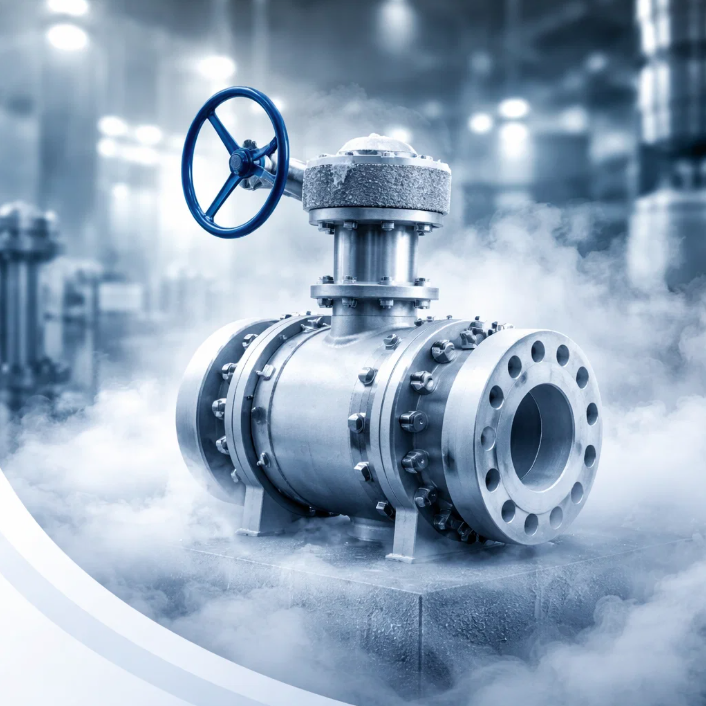
Expanding plug valve

Overview: Liquid oxygen systems demand valves that can survive extreme cold without leakage or seal failure. This blog explains how cryogenic ball valves use extended bonnets, cavity pressure relief, oxygen-clean construction, and low-emission sealing to improve safety in medical gas systems, aerospace fueling, and industrial oxygen storage. It also covers BS 6364 testing, API 598 shutoff standards, and fire-safe cryogenic valve engineering.

Why can one small oxygen leak become a major industrial hazard?.

Because liquid oxygen does not behave like ordinary process media. At -183°C, metals contract, seals stiffen, and trapped pressure rises rapidly. That is why cryogenic ball valves are engineered differently from standard industrial valves. In medical gas plants, aerospace fueling systems, and industrial oxygen storage terminals, the valve itself becomes part of the safety system.

Why Standard Valves Fail in Liquid Oxygen Service

A standard valve may operate perfectly in water or hydrocarbon service. Place that same valve into liquid oxygen duty, and problems begin quickly.
Stem seals shrink. Packing loses flexibility. Thermal shock stresses internal components. Worse still, oxygen-rich environments increase combustion intensity dramatically.
Even materials that normally resist ignition can burn aggressively under concentrated oxygen exposure.
That is why cryogenic oxygen valves are built under specialized standards such as:
  • 1. BS 6364 for cryogenic valve testing

  • 2. API 598 for shutoff verification

  • 3. ISO 15848 for fugitive emission control

  • 4. API 607 fire-safe validation in oxygen-sensitive applications

How Do Cryogenic Ball Valves Survive -183°C Conditions?

The answer starts with thermal isolation.
Most cryogenic ball valves use an extended bonnet design. This elongated stem housing creates distance between the cryogenic media and the stem packing area. The packing remains closer to ambient temperature while the valve body handles ultra-cold liquid oxygen.
Without this separation, the stem seals can freeze, crack, or lose compression strength.
Modern cryogenic bonnet geometry also protects operators from direct cold transfer during manual operation. In large LOX transfer stations, that protection matters every single day.

Crucial Point To Note

Extended bonnet construction prevents freeze damage around stem packing assemblies and reduces the risk of fugitive oxygen emissions during thermal cycling.

Why Low-Emission Packing Is Critical in Oxygen Systems

Liquid oxygen systems cannot tolerate atmospheric leakage.
Even a minor oxygen vapor leak can create an oxygen-enriched zone around equipment. In that environment, oils, dust particles, clothing fibers, or hydrocarbons can ignite far more easily.
Low-emission packing systems help prevent this danger.
Cryogenic valves commonly use graphite-filled PTFE or advanced sealing materials designed to maintain compression under repeated expansion and contraction cycles. High-performance packing systems are also tested under ISO 15848 low-emission standards to control fugitive leakage.
That sealing stability directly improves:
  • 1. Operator safety

  • 2. Environmental protection

  • 3. Oxygen transfer reliability

  • 4. Long-term valve integrity

Why Oxygen Cleaning Is Non-Negotiable

Here is where many procurement teams make dangerous assumptions.
A valve rated for cryogenic temperatures is not automatically safe for oxygen service.
Liquid oxygen systems require oxygen-clean construction. Internal components must be thoroughly degreased and cleaned to remove hydrocarbons, machining residue, oils, and contaminants that may ignite under oxygen exposure.
This process typically follows oxygen cleaning specifications such as:
  • 1. CGA G-4.1

  • 2. ASTM A380

  • 3. EIGA cleaning procedures

Think of it like handling medical surgical tools. One contaminant in the wrong place changes the entire risk profile.

How Does Pressure Build-Up Affect Cryogenic Valve Safety?

Cryogenic liquids expand rapidly when trapped and exposed to warming temperatures.
This creates a hidden risk inside valve cavities.
To control that pressure rise, many engineered cryogenic floating ball valves include cavity pressure self-relief construction. This allows trapped pressure to vent safely before damaging seats or internal sealing components.
Without cavity pressure relief, internal pressure can increase enough to:
  • 1. Distort valve seats

  • 2. Damage sealing surfaces

  • 3. Increase leakage rates

  • 4. Create unsafe operating conditions

Crucial Point To Note

Cavity pressure relief systems prevent trapped cryogenic liquid from generating dangerous internal expansion pressure during temperature fluctuations.

Which Materials Work Best in Cryogenic Oxygen Service?

Material selection decides whether the valve survives or fails.
Cryogenic oxygen valves commonly use:
  • 1. ASTM A182 F316 stainless steel

  • 2. F304 stainless steel

  • 3. Forged stainless steel trim

  • 4. Reinforced PTFE or PCTFE seats

These materials retain toughness and dimensional stability at cryogenic temperatures.
Certain carbon steels become brittle under thermal shock. Improper seat materials can harden and lose sealing contact.
This is why experienced engineers never specify cryogenic valves based on price alone.

Expert Insight From the Field

“Most long-term cryogenic leakage problems begin around thermal movement near the stem sealing area, not the ball itself,” says a Cryogenic Flow Systems Specialist with over two decades of LNG and industrial gas experience.
That observation reflects real plant conditions. Cryogenic systems rarely fail suddenly. Small sealing instability grows over repeated temperature cycles.

How Floating Ball Designs Improve LOX Safety

Floating ball designs improve sealing performance by allowing line pressure to push the ball firmly against the downstream seat.
This creates tighter shutoff under varying pressure conditions while reducing leakage risks.
Many EPC contractors now prefer floating ball designs because they:
  • 1. Reduce maintenance frequency

  • 2. Improve shutoff reliability

  • 3. Support API 598 leakage compliance

  • 4. Perform well under thermal cycling

If you are evaluating a cryogenic floating ball valve supplier, confirm the valve includes:
  • 1. BS 6364 cryogenic testing

  • 2. ISO 15848 fugitive emission compliance

  • 3. API 598 shutoff validation

  • 4. Fire-safe certification

  • 5. Oxygen-clean preparation

What Should You Verify Before You Buy Cryogenic Floating Ball Valve Systems?

Before you buy cryogenic floating ball valve assemblies, verify:
  • 1. Material traceability documentation

  • 2. Oxygen-clean certification

  • 3. Bonnet extension suitability

  • 4. Anti-static protection

  • 5. Fire-safe testing compliance

  • 6. Cryogenic cycling performance

  • 7. Pressure relief capability

A low-cost valve that fails in oxygen service becomes expensive very quickly.

Why Industrial Operators Now Prioritize Low-Emission Cryogenic Valves

Environmental regulations are tightening. Operator safety expectations are rising. Downtime costs continue climbing.
That shift is changing valve procurement strategies across:
  • 1. Medical oxygen facilities

  • 2. LNG terminals

  • 3. Aerospace fuel systems

  • 4. Industrial gas infrastructure

  • 5. Defense fueling networks

Modern cryogenic valve engineering now focuses on emission reduction, thermal stability, and long operational life simultaneously.
The valve is no longer just a flow device. It is part of the plant’s risk management strategy.

Final Thoughts

Liquid oxygen systems operate in conditions where small engineering failures can create serious operational risks. Extreme cold, oxygen enrichment, thermal contraction, and pressure build-up demand valve systems designed specifically for cryogenic duty. That is why extended bonnets, cavity pressure relief, ISO 15848 low-emission sealing, BS 6364 testing, and oxygen-clean construction are essential features in modern cryogenic valve systems.
At Keystone Valve Supply, we help you source engineered cryogenic valve solutions built for reliable oxygen handling in critical industrial environments.

FAQs

What temperature does liquid oxygen operate at?
Liquid oxygen typically operates at approximately -183°C under cryogenic storage and transfer conditions.
Why are extended bonnets used in cryogenic valves?
Extended bonnets isolate stem packing from extreme cold and prevent seal damage caused by thermal contraction.
What is BS 6364 in cryogenic valve applications?
BS 6364 is an international standard covering cryogenic valve design, testing, and low-temperature performance validation.
Why is oxygen cleaning important in LOX valves?
Oxygen cleaning removes hydrocarbons and contaminants that could ignite in oxygen-rich environments.
What causes fugitive emissions in cryogenic systems?
Thermal cycling, damaged packing, stem contraction, and poor sealing materials commonly cause fugitive emissions.
What materials are commonly used in cryogenic ball valves?
F316 stainless steel, F304 stainless steel, PTFE, and PCTFE are commonly used in cryogenic oxygen service.
Why do cryogenic valves require cavity pressure relief?
Trapped cryogenic liquid expands rapidly during warming, creating dangerous internal pressure buildup.
What standards govern cryogenic ball valve testing?
Common standards include BS 6364, API 598, ISO 15848, API 607, and API 6D.
How do floating ball valves improve sealing performance?
Floating ball designs use line pressure to improve downstream seat sealing and reduce leakage.
Which industries commonly use cryogenic oxygen valves?
Medical gas plants, aerospace fueling systems, LNG terminals, industrial gas facilities, and chemical processing plants commonly use them.